The recent meeting between Vladimir Putin and Nikol Pashinyan clearly demonstrates the changes taking place in Russia–Armenia relations. If in the previous stage these relations were mostly assessed within the framework of a strategic alliance, currently more complex, multi-layered and, in some sense, contradictory relations are emerging between the parties. During the meeting, the emphasis on Russia’s long-standing economic and energy support to Armenia, particularly the sale of gas at low prices and re-export issues, serves as an important signal reflecting Moscow’s attitude toward Yerevan’s recent foreign policy course.
This meeting is not only a discussion of bilateral relations, but also appears to be a component of processes taking place within a broader geopolitical context. Armenia’s expansion of relations with the West in recent years and its pursuit of a more flexible foreign policy are among the key issues attracting Russia’s attention. The fact that the meeting coincides with the pre-election period indicates that this dialogue is closely linked to internal political processes, turning it into a point of intersection between both foreign and domestic policy.
Contradictions and political messages
Armenian political commentator Ishkhan Verdyan assesses the nature of the meeting as multi-layered and contradictory, emphasizing that this dialogue goes beyond the formal diplomatic framework.

He told APA that this meeting was not merely negotiations conducted within the framework of an official protocol: “During the dialogue, the sides conveyed political messages to each other not openly, but in a sufficiently clear manner. Both serious discussions and subtle irony and insinuations at the rhetorical level were observed. This shows that although relations may appear stable on the surface, there are mutual dissatisfaction and disagreements at a deeper level. Such a form of communication usually indicates underlying tension between the parties and reflects a transition to a stage different from the classical model of alliance.”
Verdiyan adds that the emphasis on issues such as the democratic environment, freedom of speech, and internet freedom in Pashinyan’s statements is not accidental and can rather be assessed as political signals addressed to the West. In his view, this approach is an attempt by Armenia to present itself as a more independent and West-oriented political system.
At the same time, he notes that Putin’s response rhetoric touching upon Armenia’s internal political processes was not accidental: “This was indirectly a message addressed to Yerevan that Moscow is closely monitoring developments within Armenia and is not indifferent to these processes. Such a mutual approach transforms the dialogue from a formal discussion into an exchange of political signals.”
Tatyana Poloskova, First-Class State Advisor of the Russian Federation and Doctor of Political Sciences, evaluates the same process within a more pragmatic framework and refrains from emotional interpretations.

Poloskova told APA in her statement that the dialogue took place in a generally calm and controlled atmosphere: “No open confrontation or tension was observed between the parties. On the contrary, despite existing disagreements, communication was maintained within the framework of mutual respect. Such meetings usually serve to preserve relations, continue dialogue, and prevent possible crises. In this regard, it would not be correct to assess this meeting as a dramatic turning point.”
Poloskova believes that for Moscow, the main priority is to avoid a complete breakdown of relations and to maintain ties with Armenia.
Pre-election Armenia: internal political dynamics and influencing factors
The fact that the meeting took place during the pre-election period further intensifies discussions regarding Armenia’s internal political environment. At this stage, the rhetoric and political messages of external actors may become part of the internal political struggle.
In this context, Ishkhan Verdyan draws attention to the differences observed in approaches to electoral processes and evaluates this as a principled issue:
“If we are talking about the legitimacy of electoral processes and the principle of sovereignty, this approach should be applied uniformly in all cases. For example, attempts of external interference in elections in other countries lead to serious legal and political consequences. However, in the context of Armenia, different approaches are sometimes observed, which inevitably raises questions about double standards. This shows that in regional politics, political interests are sometimes prioritized over principles.”
Verdiyan adds that such signals during the pre-election period can be used to influence public opinion and may lead to changes in the internal political balance.
Poloskova, however, approaches this issue more cautiously and brings Armenia’s state sovereignty to the forefront.
She noted that Armenia is an independent state and that its political system is determined solely by its citizens: “The right to participate in elections belongs only to the citizens of Armenia, and this principle is unchanged. Attempts of external influence are possible in any country, but they do not determine the final outcome. The key decision is made by society, and this is of fundamental importance from the perspective of statehood.”
She also noted that open support by external actors for any particular political force can often have the opposite effect, creating additional risks for those forces.
The Western factor: approaches and geopolitical interpretations
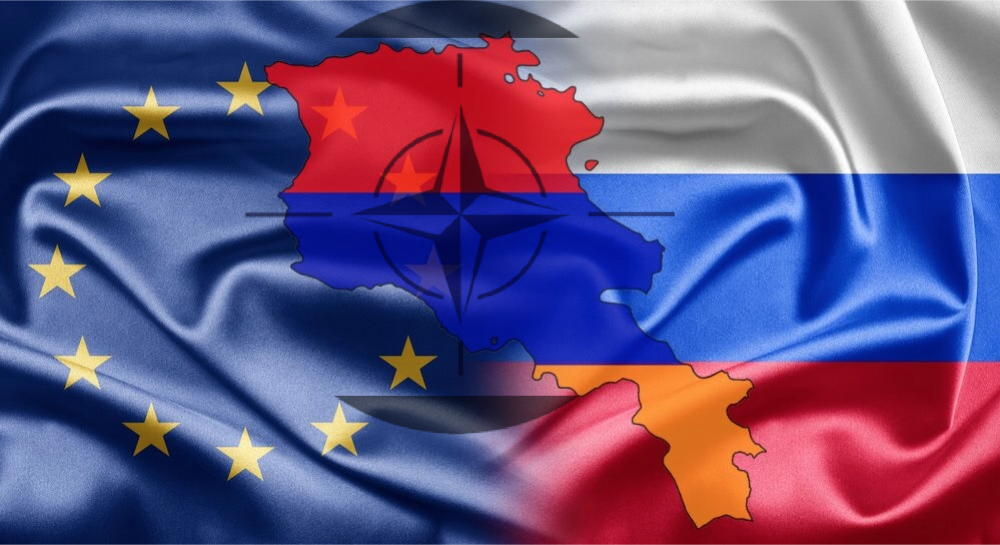
In the context of influence over Armenia, the West also plays an important role. However, the main issue here is the lack of a unified approach and its predominantly pragmatic nature.
Ishkhan Verdyan says that in the South Caucasus context, relations between the West and Russia often do not carry as sharp a confrontational character as they are presented: “On the contrary, in several cases it is possible to observe that their positions overlap. This has particularly manifested itself in international mechanisms that have operated over a long period. In this regard, the concept of ‘confrontation’ sometimes appears as a simplified approach shaped for public opinion.”
According to Verdyan, the processes taking place around Armenia are more within the framework of a managed balance and the alignment of interests.
Poloskova, approaching the issue from a different angle, draws attention to Russia’s internal problems: “It would not be correct to explain the processes in the region solely by the influence of the West. A significant part of the difficulties Russia faces in its near abroad is related to its own internal issues. The insufficient effectiveness of strategic approaches, the weakening of personnel potential, and institutional shortcomings all influence these processes.
If influence capabilities are weakening, this is not only due to the strengthening of competitors, but also to the fact that internal resources are no longer at their previous level. In this regard, the issue requires a more complex approach.”
Armenia’s position: geopolitical platform and internal transformation
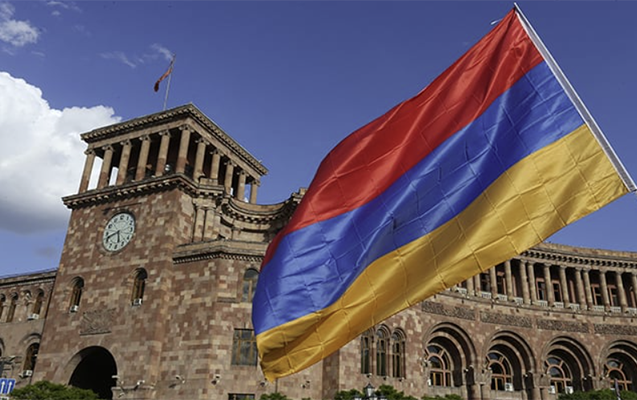
In the current conditions, Armenia acts both as a platform of geopolitical competition and as a state undergoing internal transformation.
In this context, Tatyana Poloskova states that in the modern system of international relations, all states try to influence each other’s internal processes through various means: “This is carried out through the formation of influence groups, the use of soft power tools, and various political mechanisms. In this regard, Armenia is also among the countries influenced by these general tendencies.”
Poloskova adds that the processes taking place within Armenia are not only related to geopolitical competition, but are also connected with changes in the internal elite and the redistribution of economic interests.
Verdiyan, however, believes that internal factors play a greater role in these processes, and that the weakening of the influence of previous political and economic groups is one of the main reasons behind the current dynamics.
Regional context: Azerbaijan’s balanced policy

In this complex geopolitical environment, the foreign policy course implemented by President Ilham Aliyev stands out as a distinct and multi-vector approach in the region. Azerbaijan builds its position in international relations not on confrontation, but on the principles of balance and national interests, maintaining parallel and pragmatic relations with both Russia and the West. This approach provides the country with broader room for maneuver and makes it a more independent actor in the region.
Azerbaijan’s active participation in energy and transport projects increases its geopolitical significance, which in turn creates additional leverage in foreign policy. At the same time, while cooperating with various partners, Baku seeks to avoid dependence on any geopolitical bloc and bases its decisions primarily on national interests.
In this context, the importance of a similar approach for Armenia is also a subject of discussion. Against the backdrop of existing geopolitical pressures, a transition to a balanced and multi-vector policy model may be considered as an alternative in terms of reducing external dependence and strengthening decision-making independence. This, in turn, could contribute to the formation of a more stable and predictable political environment in the region.
Conclusion
The meeting between Putin and Pashinyan demonstrates that the political processes forming around Armenia are multi-dimensional and complex in nature. On the one hand, this dialogue shows that relations between Russia and Armenia are moving to a new stage, while on the other hand, it acts as a reflection of changes taking place in a broader geopolitical context.
One of the main conclusions from the meeting is that Armenia is no longer being shaped solely as a state within the sphere of influence of a single power center, but rather as a more complex political space where the interests of various actors intersect. In this process, both external influences and internal political and institutional factors play parallel roles.
In this regard, Armenia’s future political trajectory will be determined not only by the direction of geopolitical competition, but also by the political balance forming within the country, the resilience of institutions, and the choices of society.

