Global energy security, the “green energy” transition, regional cooperation and the economic model of the future are being discussed at “Baku Energy Week.” This shows that Azerbaijan has already turned from a regional energy producer into an active participant in the global energy agenda.
Thirty years ago, when the Caspian Oil and Gas Exhibition began, Azerbaijan was taking its first steps. Today, “Baku Energy Week” is one of the world’s leading energy platforms. It is no coincidence that an energy event that once mattered only for the region has today become one of the authoritative international platforms where global energy policy is discussed.
This development path reflects not only the growth of an exhibition, but also the historic transformation that Azerbaijan’s energy strategy has undergone. As President Ilham Aliyev emphasized, the Caspian Oil and Gas Exhibition laid the foundation for the energy development of modern Azerbaijan: “As time passed, it transformed and became bigger, and now it is called Baku Energy Week, with numerous events and many very good ceremonies. As was correctly mentioned, the Shah Deniz contract, one of the biggest gas field contracts in the world, was signed almost exactly 30 years ago, in June 1996. And that actually opened a new chapter in Azerbaijan's modern gas development, providing energy security for a growing number of countries.”

Member of the Milli Majlis Committee on Economic Policy, Industry and Entrepreneurship, Rovshan Muradov, believes that the messages given by President Ilham Aliyev at “Baku Energy Week” show that Azerbaijan has turned its energy resources not only into a source of economic income, but also into one of the main tools of national development and geopolitical power:
“The messages voiced by President Ilham Aliyev at “Baku Energy Week” demonstrate that Azerbaijan’s energy policy has already gone beyond the classic raw material export model and acquired broader strategic content. The country uses its energy resources not only as a source of economic income, but also as one of the main tools for strengthening national development, geopolitical influence opportunities and international positions.”
These thoughts of the head of state once again recall important stages in Azerbaijan’s energy history. The strategic energy policy founded in that period became one of the main pillars of the country’s economic development, international partnership relations and strengthening geopolitical position in the following years. Today, Azerbaijan’s gas and oil are not only economic resources, but also an important strategic tool that strengthens international cooperation, contributes to energy security and increases the country’s global prestige.
From regional project to global energy center
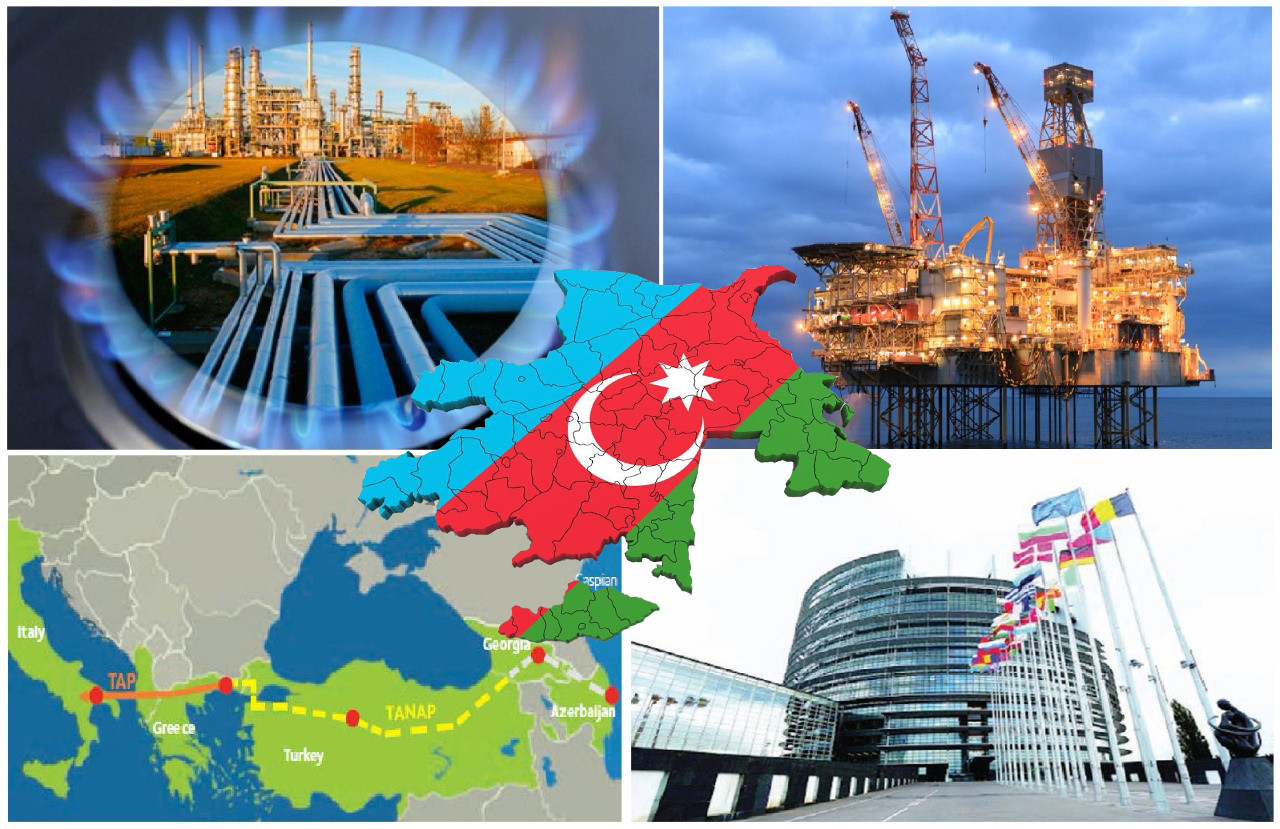
The “Contract of the Century” signed in 1994 became a turning point in Azerbaijan’s modern history. In the following period, projects such as Baku-Tbilisi-Ceyhan, Baku-Tbilisi-Erzurum, TANAP, TAP and the Southern Gas Corridor strengthened the country’s place on the international energy map.
Rovshan Muradov noted that one of Azerbaijan’s most important achievements over the past thirty years has been turning its rich energy resources into real state power: “Although many countries have oil and gas resources, not every state manages to transform this potential into independent foreign policy, sustainable economic development and international trust. Azerbaijan, however, successfully continued the energy strategy founded with the “Contract of the Century” through globally significant projects such as Baku-Tbilisi-Ceyhan, Baku-Tbilisi-Erzurum, TANAP, TAP and the Southern Gas Corridor.”
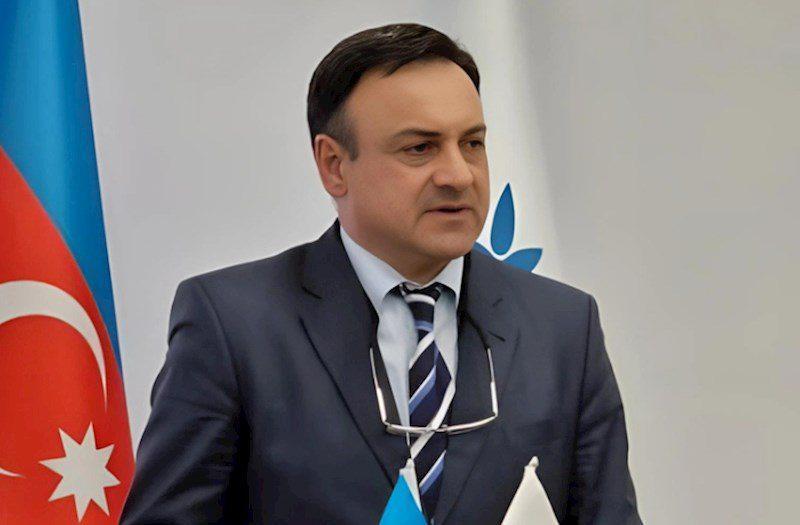 Member of the Milli Majlis Committee on Economic Policy, Industry and Entrepreneurship Rovshan Muradov
The letters addressed to “Baku Energy Week” by US President Donald Trump, Turkish President Recep Tayyip Erdogan and UK Prime Minister Keir Starmer once again demonstrated that Azerbaijan is accepted as a reliable partner in the field of energy security.
It is not possible to light up the world only with ideology
In recent years, the concept of energy transition in global energy policy was sometimes presented as a complete refusal of oil and gas. On a number of international platforms, traditional energy producers became targets of criticism, and it was claimed that countries possessing hydrocarbon resources bore the main responsibility for global climate problems. However, the energy crises experienced in recent years, the problems that arose in supply chains and geopolitical confrontations showed that the world economy cannot function without oil and gas in the near future.
“As we all know, for many years countries and companies involved in oil and gas production have been demonized and sometimes blackmailed, accused of ruining the planet, and without any grounds, cornered in public opinion,” President Ilham Aliyev said, touching upon this issue.
As the head of state also said, recent developments in the global energy market have revealed the importance of a more pragmatic approach. Maintaining a balance between energy security and the “green transition” has already become one of the main topics on the international agenda.
Azerbaijan’s energy policy is also built exactly on this principle. On the one hand, the country continues the development of the oil and gas sector and contributes to the energy security of partner countries, and on the other hand, invests billions of dollars in the development of renewable energy sources. This approach shows that Azerbaijan’s energy strategy stems not from ideological approaches, but from economic realities and long-term national interests.
How were energy revenues turned into state power?
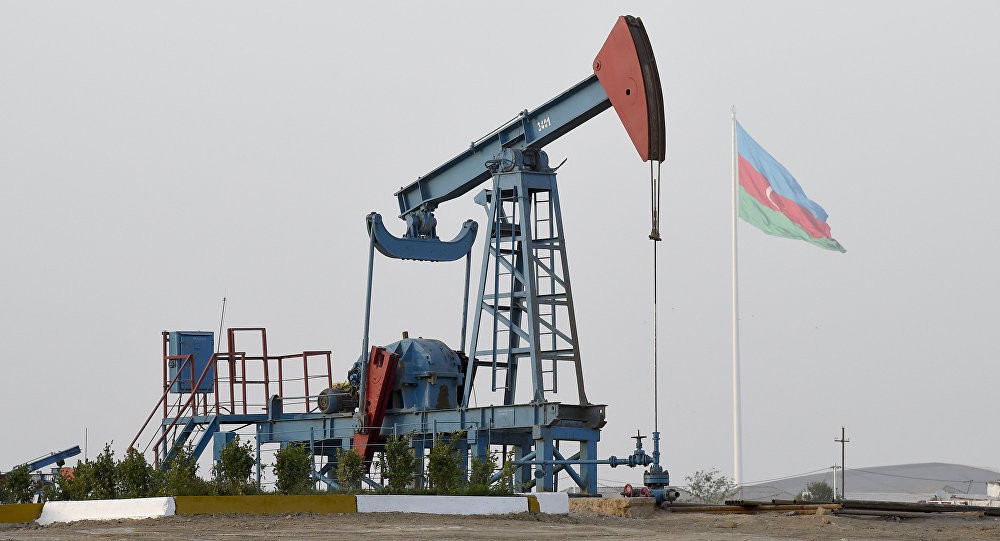
The main feature of the Azerbaijani model is the direction of energy revenues toward strategic goals.
As President Ilham Aliyev emphasized, Azerbaijan directed the revenues obtained from energy resources to human capital, education, healthcare, infrastructure projects and building a strong army.
As a result of this policy, large-scale infrastructure projects have been implemented in the country, social welfare has increased, defense potential has strengthened and Azerbaijan has become a more economically sustainable state.
Azerbaijan of the 1990s and Azerbaijan of today
To see more clearly the development path Azerbaijan has passed over the past thirty years, it is enough to compare the situation in the early 1990s with today’s reality. The country, which once faced energy shortages, high poverty and economic difficulties, has today become a state that exports energy, possesses large financial reserves and participates in international investment projects.
As President Ilham Aliyev also noted, Azerbaijan had no funds: We didn't have any funds, and we were importing electricity. We were even importing natural gas. The poverty level was more than 50%. Unemployment was widespread. And the only way for us to survive as an independent country and move forward was to use what we had—our natural resources. Azerbaijan was the first country to open the Caspian reserves to international oil companies. Since that time, a lot has happened.
It was the strategic decisions made in that period that laid the foundation for Azerbaijan’s development. Investments attracted to the energy sector accelerated the country’s economic revival, the poverty level decreased sharply, state reserves were formed, and Azerbaijan turned from a regional energy consumer into an international energy exporter. Today, SOCAR implements investment projects in various countries, while Azerbaijan acts as an important partner contributing to global energy security.
A strong economy is the foundation of a strong army

Energy revenues also played an important role in strengthening Azerbaijan’s defense potential. Economic opportunities were directed toward building a modern army, and as a result, Azerbaijan restored its territorial integrity.
The large-scale restoration programs being implemented today in Karabakh and Eastern Zangezur are also assessed as the result of that economic power.
“Green energy” is no longer an alternative
Azerbaijan’s energy strategy is no longer limited only to oil and gas production. While preserving its advantages in the traditional energy field, the country is also entering a new stage in the direction of renewable energy. Today, “green energy” has become one of the main directions of Azerbaijan’s long-term development strategy.
Milli Majlis memper Rovshan Muradov believes that the main feature distinguishing the current stage of Azerbaijan’s energy policy is the parallel development of traditional energy resources and the “green energy” strategy: “Taking into account the reality that the world economy will need oil and gas for a long time, Azerbaijan, on the one hand, preserves its existing energy advantages, and on the other hand, implements important projects in the direction of renewable energy, clean electricity exports and “green energy” corridors.”
Indeed, the projects implemented in recent years show that Azerbaijan approaches the energy transition not merely as a future perspective, but already as a practical reality. In the words of President Ilham Aliyev, “a number of projects are already at the stage of operation.”
“By the end of next year, we will have 2 gigawatts of solar and wind capacity. By the end of 2032, we will have 8 gigawatts of solar and wind capacity. And if we add hydropower, which we are actively developing, especially in the liberated areas of Garabagh and East Zangezur, where more than 300 megawatts have already been commissioned, this represents additional potential. And this will be a supplement to oil and gas exports,” the head of state emphasized.
These goals show that in the future Azerbaijan will hold an important position in the international energy market not only as a hydrocarbon exporter, but also as a producer and exporter of “green energy.” In particular, the development of Karabakh and Eastern Zangezur as a “green energy” zone confirms the formation of a new stage in the country’s energy strategy.
Azerbaijan’s gas is already the energy security of a wide geography
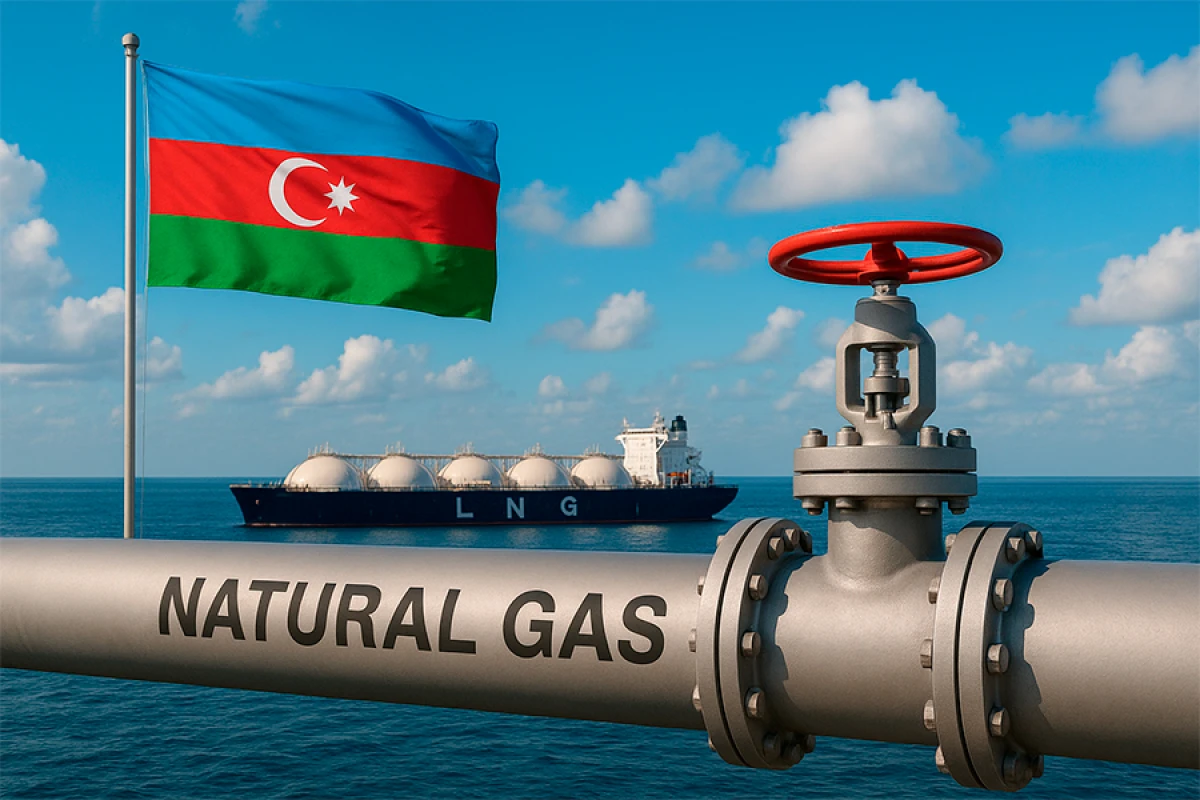
Today, Azerbaijani gas is not only the country’s export product, but also one of the important elements of Eurasia’s energy security. Currently, Azerbaijani gas is exported to 16 countries, and the geography of energy cooperation is expanding year by year. This shows the country’s growing role and strategic importance in the global energy market.
According to Milli Majlis deputy Rovshan Muradov, the energy projects implemented by Azerbaijan are not purely economic in nature, but also carry important geopolitical meaning: “These projects are important geopolitical tools that reflect not only energy infrastructure, but also Azerbaijan’s political will, strategic vision and diplomatic capabilities. The role played by Azerbaijani gas in Europe’s energy security further increases the country’s international importance. In particular, SOCAR’s access to the German and Austrian markets should be assessed as an important step expanding the geography of Azerbaijan’s energy cooperation.”
Today, Azerbaijani gas delivered to Europe through the Southern Gas Corridor plays the role of an alternative and reliable energy source for many countries. It is this factor that has taken Azerbaijan’s energy policy beyond the framework of a regional project and turned it into one of the important components of global energy security.
From energy to transport: The Zangezur corridor opens a new stage
Azerbaijan’s geopolitical importance today is no longer measured only by energy projects. The new regional realities formed in recent years have also significantly strengthened the country’s strategic position in the fields of transport, logistics and trade. In this regard, the Zangezur corridor is considered one of the projects that can change not only Azerbaijan’s, but the entire region’s economic and geopolitical map.
This route, which will connect East and West, Asia and Europe, will serve to accelerate cargo transportation, expand transit opportunities and deepen regional economic integration. At the same time, the corridor creates conditions for the formation of a new strategic platform where energy, transport and trade routes intersect.
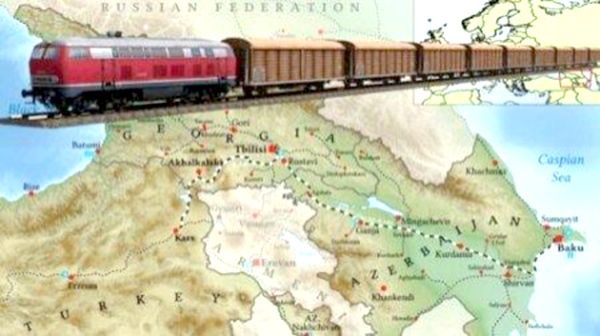
In Rovshan Muradov’s opinion, the Zangezur corridor can start a new stage of cooperation in the region: “Initiatives to establish electricity connections with Türkiye and the new opportunities formed by the Zangezur corridor can further strengthen energy, logistics and trade integration in the region. From this point of view, the Zangezur corridor should be assessed not only as a transport route, but also as a project of strategic importance in terms of energy security and regional cooperation.”
That is why the Zangezur corridor is assessed not only as a communication line that will ensure cargo and passenger transportation, but also as an important geo-economic project that strengthens energy flows, trade relations and regional cooperation. The realization of the project, while further strengthening Azerbaijan’s position in the Middle Corridor, can also turn the country into one of Eurasia’s main logistics and transport hubs.
What is Azerbaijan’s main advantage?
One of the main messages of President Ilham Aliyev’s speech at “Baku Energy Week” was that natural resources in themselves are not a guarantee of development. The main issue is how those resources are used, what purposes the revenues obtained are directed to, and how they are integrated into the state’s long-term development strategy. The results achieved by Azerbaijan over the past thirty years also demonstrate the success of this approach.
The country has directed the revenues obtained from energy resources not simply to improving economic indicators, but to forming strong state institutions, building modern infrastructure, developing human capital, strengthening defense capability and reinforcing its international positions. As a result, energy wealth has become not only an economic resource, but also a factor of national power.
Milli Majlis deputy Rovshan Muradov noted that the energy policy implemented by Azerbaijan in recent years has played a decisive role in the country’s transformation from a regional energy producer into a strategic partner contributing to global energy security: “The energy policy implemented under the leadership of President Ilham Aliyev is turning Azerbaijan not only from a country exporting oil and gas into one of the important states contributing to global energy security and actively participating in the “green transformation” process. This strategy serves to further strengthen the country’s positions at both regional and international levels.”
President Ilham Aliyev also explained the essence of Azerbaijan’s development model in his speech, stating that the developments currently taking place on the global energy stage have emerged thanks to the very wise and pragmatic policy of the US President: "And once again, we are all very grateful to him. Countries should not be blamed for having oil and gas because oil and gas are commodities like any other. And every country uses what it has under its soil or on the seabed in order to develop. And that was the case for Azerbaijan in the beginning of our independence. Oil and gas were the only way for us to survive as an independent country. So countries should be judged not by whether they have oil or not, but by how they use the revenues, how they invest the funds they accumulate from energy development to develop their countries, provide better living conditions for their people, and invest in green agenda issues. And I think the example of Azerbaijan can be very illustrative. It can demonstrate that when you open your country to international investment and conduct a wise policy based on national interests, you achieve success."
These thoughts of the head of state reveal the main philosophy of Azerbaijan’s energy strategy. At the center of this model is not the existence of resources, but their far-sighted management in accordance with national interests. That is precisely why Azerbaijan has been able to turn energy resources not into a source of economic dependence, but into one of the main pillars of sustainable development, political independence and international prestige.
Today, Baku is not only a capital producing energy. Baku is an important international platform where global energy security, regional cooperation, the green transition process and new geo-economic realities are discussed. The path Azerbaijan has passed over the past thirty years shows that properly managed natural resources can turn a country from simply an energy producer into an important geopolitical actor influencing international processes.

