The processes observed in northern Syria in recent months show that the situation has moved beyond the logic of a classic military confrontation and has entered a more complex, multi-layered, and long-term phase of political transformation. This stage cannot be characterized as a sudden change of power, nor as a clear military victory or defeat. On the contrary, it is a transition period in which parallel armed and administrative structures that have been formed in the region for more than a decade are gradually losing their functionality, while their place is being taken by political dialogue, selective integration, and managed stabilization mechanisms.
Syrian political commentator Ammar Kahf, commenting on this process to APA, particularly emphasizes that what is happening in northern Syria “should not be understood as a sudden collapse or the breakdown of the system.”
According to him, the fragmented governance mechanisms that had existed in the region for many years had remained in place “thanks to exceptional and temporary circumstances such as the war against ISIS and international military involvement.” Ammar Kahf believes that as those exceptional circumstances disappear, it is not realistic for these structures to remain sustainable, and the process is naturally moving toward re-centralization.
This moment also creates new realities for regional actors.
Turkish expert on terrorism and security İsmail Cingöz said that Türkiye views the changing dynamics in Syria not merely as a foreign policy issue, but as a direct matter of national security.
Çap versiyası > Azərbaycana görə Pakistan və Türkiyəyə mesajverilir? – Təyyarə qəzasında müəmma" src="https://cdn.den.az/posts/2025-11/ismaiul-cingoz-242.jpg" />
In his view, Türkiye shares a 911-kilometer border with Syria, and every change that occurs along this border has a direct impact on Ankara’s security calculations.
The expert adds that the international balance, which for years enabled the existence of non-state armed structures, is now shifting, narrowing these structures’ room for maneuver.
The strengthening of the central government’s positions is one of the main pillars of this transformation. Ammar Kahf notes that Damascus has already restored control over the country’s main population centers, strategic corridors, and regions of vital economic importance. According to him, expansion of control is being carried out not through a military blitzkrieg, but gradually, through local agreements and security mechanisms.
Kahf particularly emphasizes that in Kurdish-majority districts of Aleppo, this process took place “with minimal disruption to the civilian population and without mass violence.”
This situation is also being closely monitored from Israel’s perspective. Israeli political scientist Yuri Bocharov notes that the strengthening of Damascus’ positions does not yet mean full and stable state control.

Bocharov noted that “even if the Syrian state has formally restored its authority, it is not able to demonstrate the same level of security and control across all regions of the country.”
He emphasizes that the main issue for Israel is not whether the central government is strengthened, but whether radical or pro-Iranian armed groups that could turn against Israel in those areas will strengthen.
The localization of security issues in northern Syria is another important indicator of the process.
Speaking about underground tunnel infrastructure and the risk of sabotage, Ammar Kahf says that the existing tunnel networks do not have a systematic and nationwide coordinated nature. In his view, these networks are mainly concentrated along former front lines and in areas where non-state armed groups expected long-term confrontation. Clearance operations, meanwhile, are being carried out not as a unified military campaign, but as selective and phased security measures.
This approach also resonates with Israel’s security philosophy.
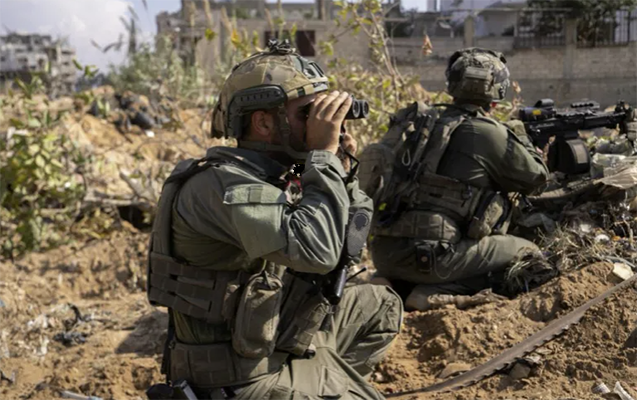
Yuri Bocharov notes that Israel “does not want to provide direct military support to non-state armed forces in such a complex and unstable environment.” According to him, Israel’s priority is to ensure security through its own resources and multi-channel deterrence mechanisms. For this reason, Israel focuses more on the overall security configuration in Syria rather than the fate of any specific armed structure.
The future of the Syrian Democratic Forces remains one of the most sensitive and controversial issues of this transitional phase.
Ammar Kahf points out that the SDF has already “lost its internal cohesion as a unified political-military project.” In his view, “accumulated grievances among Arab tribes, identity contradictions, and weak social legitimacy” within the structure are increasingly becoming more visible. Kahf emphasizes that amid this reality, the future of the SDF may be shaped not through large-scale military resistance, but through individual and conditional integration mechanisms.
At this point, Türkiye’s position serves as an additional pressure and a deterrent factor.
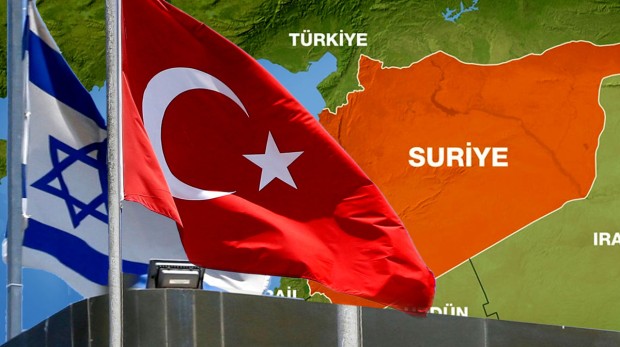
İsmail Cingöz states that Türkiye “will never allow” the PKK to establish any autonomous structure or state along its borders. According to him, if the integration of the PYD into the central government creates a direct threat to Türkiye, Ankara reserves the right to carry out a military operation by using the opportunities provided by international law. However, Cingöz adds that Türkiye's main goal is to eliminate the threat not through military escalation, but through political and administrative integration mechanisms.
From Israel’s perspective, the fate of the SDF is not a symbolic issue, but a functional one.
Yuri Bocharov adds that “the complete military pushback and removal of the SDF is not automatically considered a strategic defeat for Israel.” He believes the key question is which forces will take control of those areas and whether a security vacuum will emerge. If the integration process reduces chaos and prevents radical groups, this scenario could be considered acceptable for Israel.
These approaches show that what is happening in northern Syria is not only an internal Syrian issue, but a process of reshaping the region’s security architecture.

Concluding his remarks, Ammar Kahf says that the current stage is not about winners and losers, but about whether Syria can transition from militarized governance to political and administrative integration. According to him, the success of the process will depend on the establishment of internal dialogue, of a balance between decentralization and centralization, and of a legal framework.
İsmail Cingöz, in turn, emphasizes that this transition will not be sustainable without taking into account the security concerns of regional actors, noting that any political model in Syria must be aligned with the security sensitivities of neighboring countries.
Yuri Bocharov also takes a similar stance, stating that the situation in the region remains dynamic and that it is still too early at this stage to speak of a completed, stable, and unchanging scenario.
The new phase taking shape in northern Syria is a complex transitional period in which armed conflict has subsided, but political agreements have not yet been fully formed. The end of this process has not been predetermined, and it will be determined more by political flexibility, regional balance, and the extent to which internal integration mechanisms are functional than by military force.
Faig Mahmudov
Daryanur Jafarova

