By Peter M. Tase
Currently, the process of negotiations between Azerbaijan and Armenia continues on a bilateral basis, and this dynamic has profoundly shaped the execution of Azerbaijan’s Foreign Policy and its Diplomatic engagement across the world. Baku’s principal role as a catalyst of regional peace and economic prosperity in Eurasia, as well as its dynamic relations with Central Asian Countries, Italy and Croatia, will be the focus of this research-based analysis.
As the new global centers of gravity emerge, the EU has become the largest trade and investment partner of Baku. The EU-Azerbaijan MoU signed in July 2022 is an important gesture in terms of stable and affordable natural gas supply and opens new opportunities for a potential export of green electricity to Europe. The introduction of the Azerbaijan-Georgia-Romania-Hungary Black Sea submarine cable Project will accelerate energy transition among the participating states. Azerbaijan has emerged as a deeply valuable Strategic Partner in the exports of green energy to Europe.
Alongside this backdrop, Washington, under the leadership of President Donald J. Trump, has pursued an agenda that aims to coordinate the democratization of institutions and embolden regional security policies within the territorial space of the pro-Western nations: Georgia, Ukraine, Uzbekistan, Azerbaijan and Moldova.
According to Prof. Dr. Edmond Panariti (former Minister of Foreign Affairs of Albania):
“The November 6th (2025) U. S. - Central Asia Summit can be conceived as Washington’s major strategic success, as the Trump - Vance administration is focused on securing reliable, greater access to international sources of Critical Minerals. The C5+1 impressive diplomatic platform, launched by President Trump, between all five Central Asian leaders and the U.S. Government, marked the first time the six leaders officially met at the U. S. White House. On this occasion, the summit’s impressive result was announced, with Uzbekistan and Kazakhstan proclaiming their plans to develop a trade partnership with Washington worth US$100 billion in goods and services over the next decade, consisting in several sectors: critical minerals, aviation, infrastructure, agriculture and information technology. The pivotal outcomes of C5+1 Summit will also benefit the Republic of Azerbaijan in the years to come.”
Despite of devastating consequences and unhealed wounds of war and occupation, Azerbaijan has emerged as a nation that respects Armenia’s state borders and upholds the sovereignty and territorial integrity of all nations within their state borders, as recognized internationally.
In the geopolitical dynamics of Eastern Partnership, Azerbaijan plays a pivotal role in connecting the markets and economies of Central Asia with the European Union.
Azerbaijan continues to perceive the Eastern Partnership as an important complementary platform for the development of bilateral EU-Azerbaijan relations, based on mutual respect, equal partnership, shared interests and economic benefits. The privileged geographic position of Azerbaijan makes the Government of President Ilham Aliyev to significantly contribute to the economic growth and industrial development of Kazakhstan, Uzbekistan and other thriving Central Asian nations.
On October 20–21, 2025, President Ilham Aliyev conducted a state visit to the Republic of Kazakhstan.
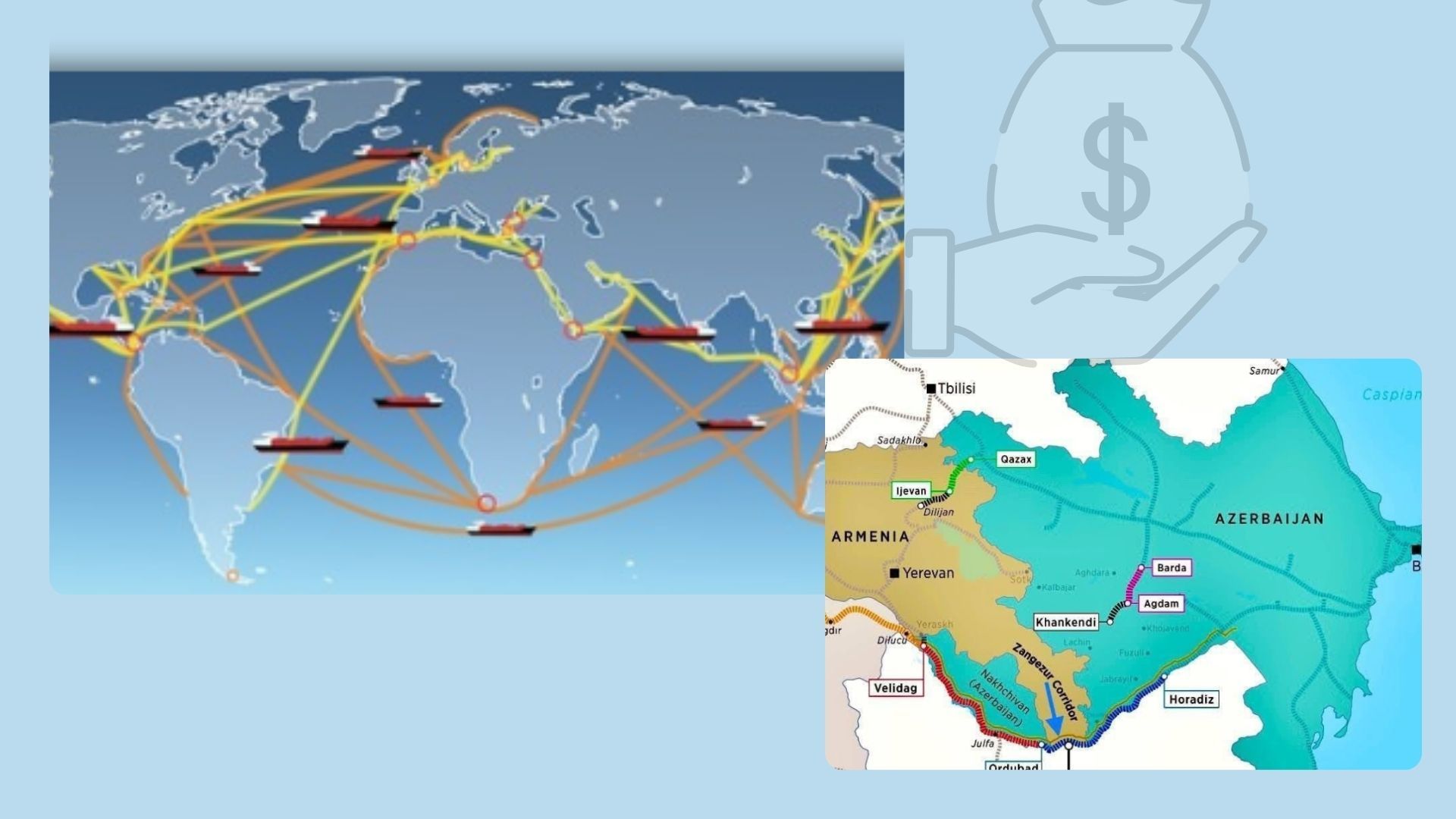
The meeting of Azerbaijan’s head of state with President of Kazakhstan Kassym-Jomart Tokayev, was strategically important for both nations, in the sphere of transportation and logistics. The signed bilateral documents seek to expand the Middle Corridor and optimize cargo flows between the ports of Baku and Aktau. Additionally, according to Mehbube Mehdiyeva (an International Affairs expert of the Azerbaijan State News Agency): “both governments agreed to implement new technological systems to ensure faster and safer transit operations between the two countries.”
The October 2025, official visit of President Ilham Aliyev to Kazakhstan represents a new chapter in the strengthening of bilateral relations between the two brotherly nations. These meetings were not simply a matter of diplomatic protocol but a strategically significant event that underscored the growing integration within the Turkic world.
Both Azerbaijan and Kazakhstan have shaped a pragmatic bilateral agenda in the fields of energy, transportation and logistics, digital technologies, economic integration, culture, and education. These discussions between Ilham Aliyev and Kassym-Jomart Tokayev encompassed the development of the Middle Corridor project; both heads of state emphasized that this corridor serves as a vital economic artery for stability, security, and economic prosperity across the Eurasian landmass.
Moreover, a bilateral agreement was reached between the State Oil Company of Azerbaijan (SOCAR) and Kazakhstan’s sovereign wealth fund on the establishment of a joint investment mechanism.
This agreement arranged the groundwork for joint research on energy markets and the implementation of new projects in the future.
In the cultural and humanitarian domain, new agreements were accomplished in university education, culture, healthcare, and scientific research. The two governments decided to enhance youth exchanges and organize joint cultural festivals and exhibitions.
In the field of regional economic cooperation, both leaders discussed the transportation of Kazakh products through the territory of Azerbaijan to other countries in Europe; these measures will further strengthen the presence of Kazakhstan’s products in international markets.
On November 15th, 2025, President Ilham Aliyev held a one-on-one meeting with Shavkat Mirziyoyev, President of the Republic of Uzbekistan, in Tashkent. In this meeting, both heads of state emphasized the successful development of bilateral relations between Azerbaijan and Uzbekistan, which are based on a multifaceted alliance and strategic partnership.
During this visit, the President of Azerbaijan Ilham Aliyev participated in the 7th Consultative Meeting of the Heads of State of Central Asia that was a perfect milestone towards a greater integration of Azerbaijan with the fraternal states of Central Asia; and expansion of regional cooperation in the fields of: economic integration, commerce, political dialogue, transportation, investment, energy, cultural and humanitarian spheres, and digital economies.
According to Aybaniz Ismayilova (a Research Fellow at ADA University’s Institute for Development and Diplomacy [IDD]):
“Cooperation between Azerbaijan and the five Central Asian states has recently been upgraded from a bilateral economic partnership into a consistent and dynamic geopolitical axis shaped by the shifting strategic landscape of the Silk Road region.
Azerbaijani President Ilham Aliyev’s most recent visit to Uzbekistan to attend the Seventh Consultative Meeting of Central Asian Leaders marked a significant milestone in the country’s long-term foreign policy strategy. As a result of this groundbreaking visit, Azerbaijan became a full member of the C5 format, prompting further diversification of Central Asia’s policy agenda. In recent years, Central Asia has deliberately constructed a platform for internal synergy and strengthened regional autonomy.”
On February 19th (Thursday), 2026, U. S. President Donald Trump convened in Washington, D.C., the inaugural meeting of his Board of Peace, where the leaders of Azerbaijan, Kazakhstan and Uzbekistan participated as its founding members. This historic global event was a genuine testimony to a high-level synergy, harmony that exists between the three brotherly nations. Baku and Tashkent have recently shaped a well-defined strategic compass in the realm of International Politics as the two landlocked countries are intrinsically faced with a fragile global security environment and rising new economic and military powers.
Uzbekistan is a strategic nation for Azerbaijan. Both nations have common roots, moral values, language, ethnic similarities, and a rich historical and cultural heritage. For many centuries, the fraternal nations of Azerbaijan and Uzbekistan have maintained a deep sympathy and respect for each other, the constant interstate relations are successfully developing upon this solid foundation.
As the Republic of Uzbekistan is actively exploring trade and economic partnerships with the Republic of Paraguay and other member nations of MERCOSUR, the Republic of Azerbaijan will indispensably play a vital supply chain management role with its advanced airport infrastructure and the Port of Baku, serving as Paraguay’s genuine bridgehead to trade cooperation and commerce with Uzbekistan and Central Asia region.
On February 26th, 2026, during his working visit to the Republic of Paraguay, the Minister of Investment, Industry and Trade of the Republic of Uzbekistan, Laziz Kudratov, held a series of meetings aimed at increasing trade, economic and investment cooperation between Asuncion and Tashkent. Investment Minister Laziz Kudratov, met with Paraguayan officials to discuss a potential industrial cooperation program for 2026–2027 covering agribusiness, energy, mining, chemical industry and textiles. The agenda includes launching joint projects under Paraguay’s attractive legislation for foreign investments, which offers unparalleled tax incentives for export-oriented production, and announced the approval of Paraguayan beef and sheep meat to be exported to Uzbekistan. It is abundantly clear that Azerbaijan will increasingly help synchronize the commercial and industrial cooperation that is expected to flourish between the Governments of Paraguay and Uzbekistan.
The Middle Corridor, also known as the Trans-Caspian International Transport Route (TITR), established in 2023, as an intermodal transportation continental asset will minimize environmental impact and offer a “one-stop-shop” service for the upcoming Paraguayan Beef Cargo delivery operations, through the territory of Azerbaijan, while enhancing transportation efficiency, provide transparency in tariffs mechanism, and ensure a timely delivery of commodities.
As the Republic of Uzbekistan is actively exploring trade and economic partnerships with the Republic of Paraguay and other member nations of MERCOSUR, the Republic of Azerbaijan will indispensably play a vital supply chain management role with its advanced airport infrastructure and the Port of Baku, serving as Paraguay’s genuine bridgehead to trade cooperation and commerce with Uzbekistan and the Central Asia region.
The bilateral alliance between Azerbaijan and Uzbekistan is currently placed at the highest strategic level. Over the last 18 months, both heads of state have officially met five times in either Baku or Tashkent; the leader of Uzbekistan, President Shavkat Mirziyoyev, is a prominent statesman and a great friend of Azerbaijan.
As Western Asia is faced with a multifaceted geopolitical equation:
Khojaly transportation infrastructure, with its geographic location, is an important economic artery of the Republic of Azerbaijan and of the entire Central Asia region.
The reconstruction of this magnificent city and its transportation architecture, taking place under the leadership of President Ilham Aliyev, is taking shape very fast and in the next few years, we will see the inauguration of a modern internationally recognized airport in Khojaly that will be used by other nations in Central Asia and have an indispensable role towards the economic integration of South Caucasus countries. The government of Azerbaijan is pursuing a highly effective economic diplomacy that will further strengthen the geopolitical role of Dağlıq Qarabağ on the world stage.
In 2022, the first group of displaced persons had already been resettled in the newly built Aghali village, marking the practical start of the “Great Return” program, which targets around seven hundred thousand citizens of Azerbaijan who were FORCIBLY DISPLACED.
In the last semester of 2022, the Azerbaijani Government, supported by the EU, was able to extract over 2,728 anti-personnel landmines that were planted in 2021 by the Armenian terrorists in the sovereign territories of Azerbaijan. The minefield of newly planted Armenian-manufactured mines was inspected by the leadership of the Russian peacekeeping contingent and the Joint Russian-Turkish Monitoring Center, as well as by various military attaches of the embassies accredited in Azerbaijan.
In the economic integration sphere, Azerbaijan and the EU are working side by side to execute the EU’s Economic and Investment Plan in Azerbaijan, and this is a positive example of a concrete development-oriented cooperation. Massive contamination of territories of Azerbaijan with land mines and other explosive devices is a key challenge to post-conflict rehabilitation projects and reconstruction.
Since the signing of the November 10th, 2020, Trilateral Statement, 268 Azerbaijani civilians have been victims of mine explosions, 45 were killed and 223 wounded, among them 9 children, 1 woman, and 3 media representatives.
By recklessly disregarding the rising humanitarian consequences on almost every day, Armenia refuses to share a complete list and accurate information on the minefields. On the contrary, it planted new landmines at a massive scale in the territory of Azerbaijan, until September 19th, 2023.
Today, our societies stand at a critical geopolitical juncture. Azerbaijan, over the last twenty-three years, President Ilham Aliyev has guided his nation towards a path of successful diplomatic engagements, establishment of strategic alliances with Central Asian nations and key European governments. President Aliyev has leveraged new technologies, strengthened democratic institutions and articulated a vision that strengthens Baku’s geopolitical role as a mediation platform used to normalize the Turkish-Israeli relations.
Inara Yagubova (a Senior Research Fellow at the Institute for Development and Diplomacy at ADA University) emphasizes that: “Azerbaijan’s strategic recalibration of the terms of its international participation has not only improved the country’s political power but also widened the scope of its foreign policy objectives. Baku is increasingly coordinating its diplomatic engagement with tangible contributions to international development and humanitarian endeavors in an effort to project an image of itself as a trustworthy and accountable player on the global scene.”
In early 2014, the liberal democracy principles - that were heralded as the prevailing force in the ideological struggle of the Second World War and the Cold War – began to shatter and a cascade of geopolitical factors significantly undermined transatlantic democratic values. In this new era of emerging geostrategic flashpoints, the Republic of Azerbaijan has harnessed strong economic and political partnerships with the Central Asian nations, Türkiye, Israel, European countries, and the United Arab Emirates.
The post-Cold War order has ended, and Washington’s special global supremacy in the international landscape is over. The propensity of economic growth and industrial innovation landscape has a brighter future in prosperous nations, including Azerbaijan, the United Arab Emirates, and Türkiye, whose role in geopolitical affairs is pivotal and their coveted respective geographic locations are the fulcrum of international trade.
---------
Peter Marko Tase is a freelance writer and journalist of International Relations, Latin American and Southern Caucasus current affairs. He is the author of America's first book published on the historical and archeological treasures of the Autonomous Republic of Nakhchivan (Republic of Azerbaijan)
---------
The views and opinions expressed by guest columnists in their articles may differ from those of the editorial board and do not necessarily reflect its views.

