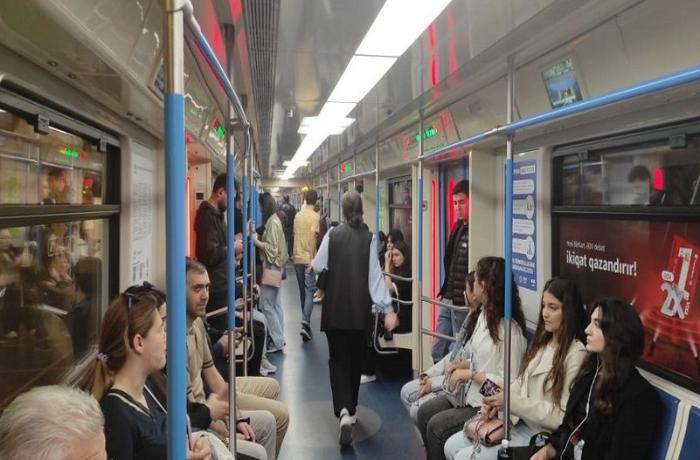
Among the countries in the region, Tbilisi ranks first in terms of metro station-to-population ratio.
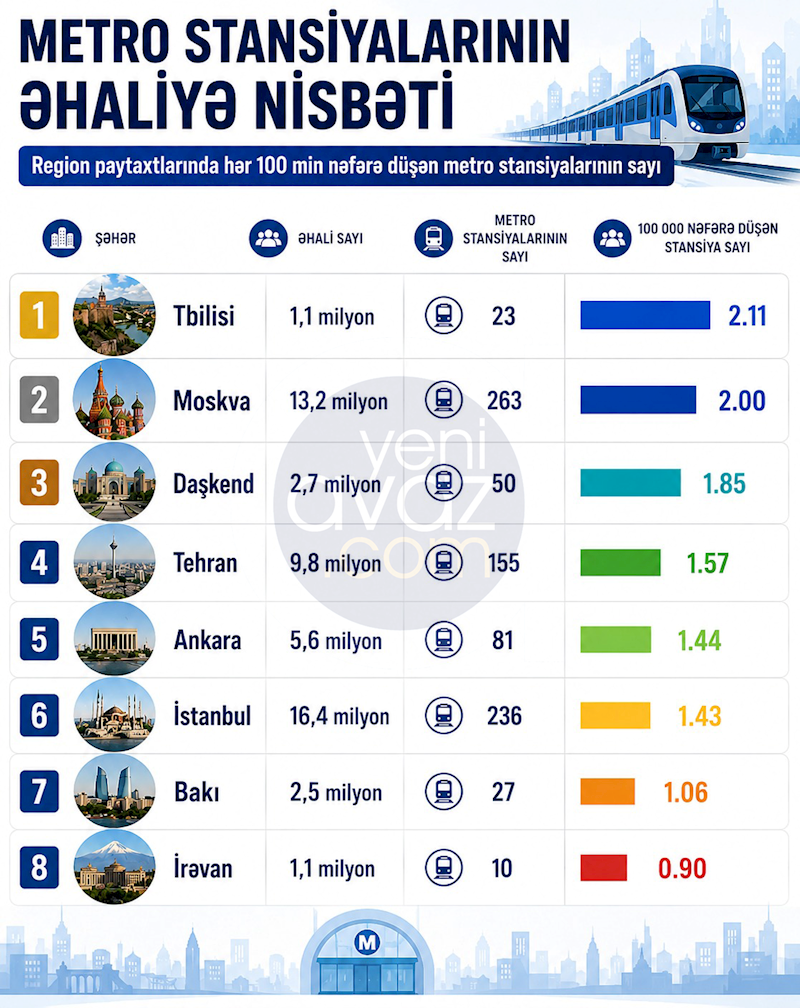
According to Yeniavaz.com, citing information from relevant official bodies, 23 metro stations serve Tbilisi's 1.1 million residents, or 2.11 stations per 100,000 people.
Second on the list is the Russian capital, Moscow. According to official data, it has 13.1 million residents and 263 metro stations. The number of stations per 100,000 people in Moscow is 2.
The capital of Uzbekistan, Tashkent, ranks third with a ratio of 1.85. The city has 50 metro stations for 2.7 million people. Our southern neighbor, the capital of Iran, Tehran, has a ratio of 1.57 stations per 100,000 people, despite having 155 stations and a population of 9.8 million.
Turkey's capital, Ankara, has a metro accessibility rate of 1.44 with 81 stations. Istanbul, with 236 stations and a population of 16.4 million, has a metro accessibility rate of 1.43.
The capital, Baku, ranks at the very bottom of the list. According to official data, the capital's population of approximately 2.5 million is served by 27 metro stations, for a metro accessibility rate of 1.06 stations per 100,000 people. The lowest metro accessibility rate was recorded in Yerevan, which has 10 metro stations per 1.1 million people, with a metro accessibility rate of 0.90.
Murad Mammadov

