There are events in Azerbaijan’s modern history whose significance is not limited to the day they occurred. Over time, it becomes clearer that these events were not merely military episodes of a certain period, but also formed the political, strategic, and psychological foundation of subsequent stages.
The April battles of 2016 are among such events. On the one hand, these battles were a real military response to the tension on the front line; on the other hand, they were a practical confirmation of the results of the long-term army-building efforts carried out by the Azerbaijani state.
Against the backdrop of the 44-day Patriotic War and the anti-terror measures that took place a few years after the April battles, the April battles are assessed not merely as a local success, but as the initial stage of a great victory.
Historical and political significance
Speaking about the significance of the April battles, participant of the First Karabakh War and the Horadiz operation, reserve colonel and military expert Shair Ramaldanov told APA that the April battles of 2016 became a strategic and political turning point that demonstrated the real combat capability of the Azerbaijani Army, strengthened public confidence in victory, and ultimately led to the 44-day Patriotic War.
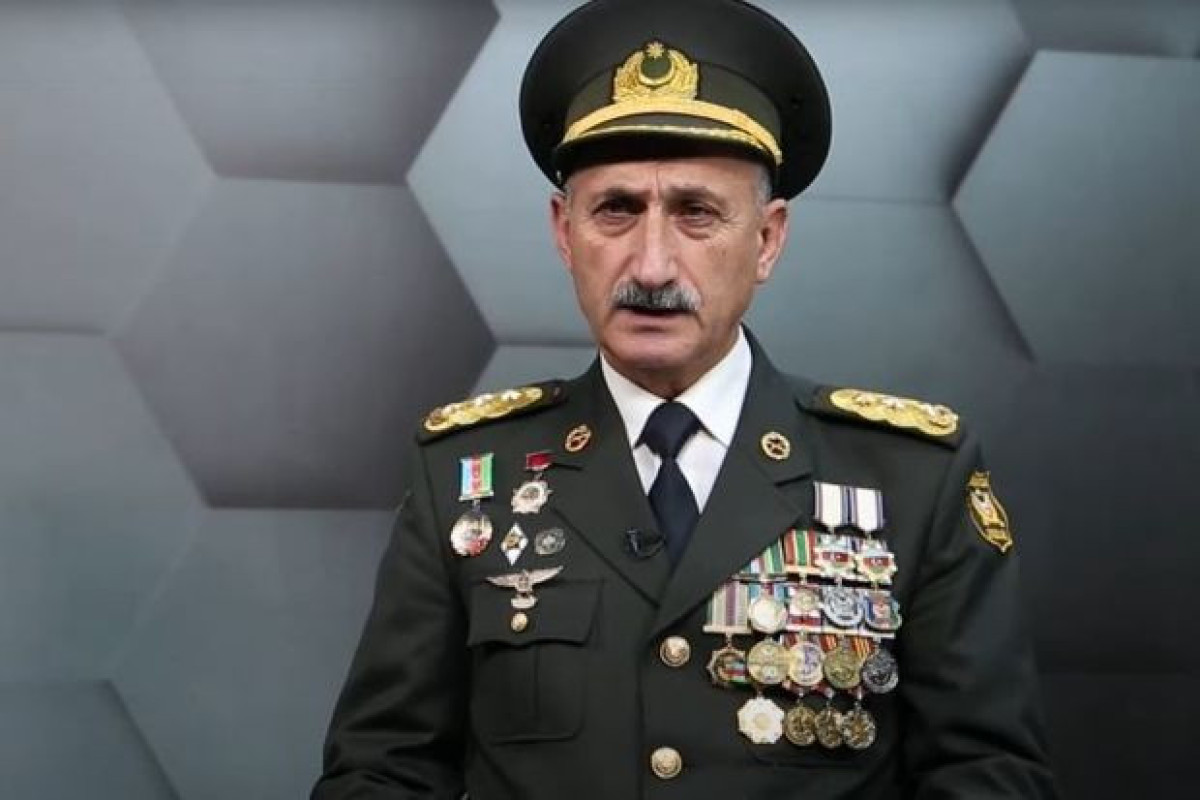
According to him, the April battles, which laid the foundation for the future victory, played the role of an important strategic and political stage: “The April battles once again proved that the Azerbaijani Army is capable of carrying out assigned tasks with high professionalism not only in exercises but also in real combat conditions; the liberation of important strategic heights in a short time, the prevention of enemy provocations, and the ensuring stability along the front line clearly demonstrated the strength of the army, which later formed the military and moral foundations of the victory achieved in the 44-day Patriotic War.”
Chairman of the Milli Majlis Committee on Defense, Security and Combating Corruption, First Karabakh War veteran Arzu Naghiyev, in his statement to APA, assessed the April battles as a turning point in Azerbaijan’s military-political history.

A. Naghiyev noted that these battles should be assessed as an important military-political event in modern history, stating that “among the main reasons for these events, which went down in history as the Four-Day War, were Armenia’s ongoing provocations, the ineffective performance of international organizations, especially the OSCE Minsk Group, and the non-implementation of UN resolutions.”
One of the key points emphasized by the MP is that “Armenia’s attempts to preserve the existing ‘status quo’ were unacceptable for Azerbaijan.”
This approach shows that the April battles were not only an expression of the battlefield, but also of political will.
Political scientist, Professor Gabil Huseynli presents the April battles as a visible manifestation of the results of reforms in the army.

The professor told APA that “the April battles demonstrated the strength of the army and the results of the reforms.”
This sentence is, in a way, a summary of the entire process. Because the April battles were not accidental or a momentary reaction. They were the first major result of years of preparation, armament policy, tactical renewal, and professionalization.
Causes of the outbreak of the battles and the nature of the operations
Explaining the conditions under which the battles began, Shair Ramaldanov noted that the April battles started with the enemy’s gross violation of the ceasefire regime: “The Armenian armed forces opened intensive fire using heavy machine guns, mortars, and artillery units, targeting settlements and civilians located along the front line.”
Another important detail emphasized by Ramaldanov is that one of the shells fell into a schoolyard, and fortunately, since there were no classes at that time, no casualties were recorded.
This detail shows that the incident was not only a military clash, but also a matter of civilian safety.
Ramaldanov further stated that “in order to eliminate the emerging threat and ensure the safety of civilians, a specific and limited military task was assigned to the Azerbaijani Army.” According to him, within the framework of this task, “the Army liberated important strategic heights in a short period of time, as a result of operations lasting only four days, prevented enemy provocations, and stabilized the security situation along the front line.”
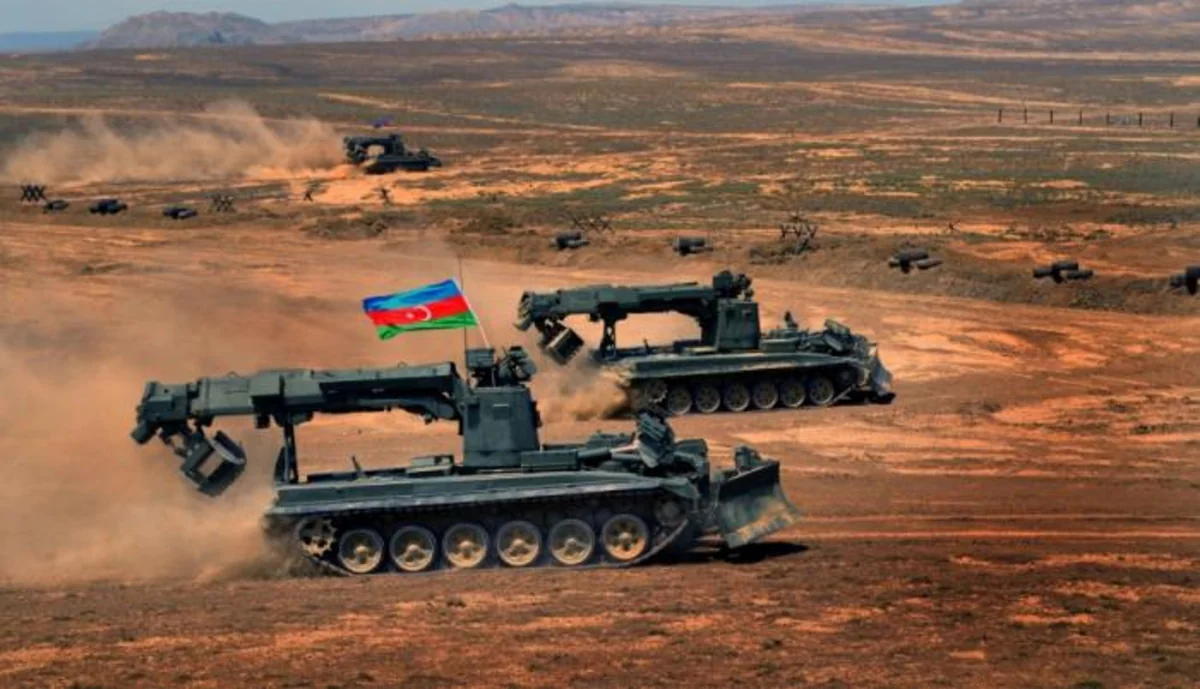
Arzu Naghiyev also explains the April events with political and military reasons. He stated that “the April battles occurred as a result of a counteroffensive operation carried out by the Azerbaijani Army in response to provocations committed by the Armenian Armed Forces along the front line.” According to Naghiyev, “significant military successes were achieved in a short period of time, and a ceasefire agreement was reached between the sides on April 5, 2016.”
This emphasis shows that the battles were both flexible and result-oriented in nature.
Gabil Huseynli, in turn, highlights the operational aspect of the issue. He noted that “after an attack was carried out against the Azerbaijani Army in April 2016, the Armed Forces immediately launched a counteroffensive operation.”
According to the professor, “as a result, the positions and defense lines of the Armenian armed forces were destroyed in a short time, and the Azerbaijani Army advanced and gained a significant advantage in several directions.”
This point demonstrated that the Azerbaijani Army possesses preparedness and rapid decision-making capabilities.
Military results and strategic advantages

One of the main outcomes of the April battles was the establishment of control over strategic positions. Shair Ramaldanov noted that as a result of the operations, “important strategic heights were liberated, enemy provocations were prevented, and the security situation along the front line was stabilized.” Expanding on this, he stated that “significant innovations were also applied in the methods of conducting operations. The more active participation of special forces, coordinated actions of units, and flexible tactical maneuvers came to the forefront, which played an important role in breaking through the enemy’s defense line.”
Arzu Naghiyev illustrates this advantage more clearly with specific examples. According to him, “among the main strategic successes achieved during the April battles were the liberation of the Lalatapa height, the establishment of control over heights in the Talish direction, and securing superiority over large areas.” Naghiyev added that “these heights created logistical and tactical advantages in subsequent battles.”
In other words, the result achieved here was not limited only to the four-day period, but also served as a foundation for future military stages.
Gabil Huseynli also places special emphasis on the importance of strategic heights. He stated that “during the battles, strategic heights located in various areas starting from the Tartar direction were taken under control. These heights were of great importance both in terms of observation and tactics, and their capture further strengthened the army’s advantage.”
The professor further noted that “several settlements were also liberated from occupation, and as a result of the army’s advance, the enemy’s defense line was broken.” He particularly emphasized that “the liberation of 14 strategic heights should be considered a major military success.”
Army building and the real test of modernization
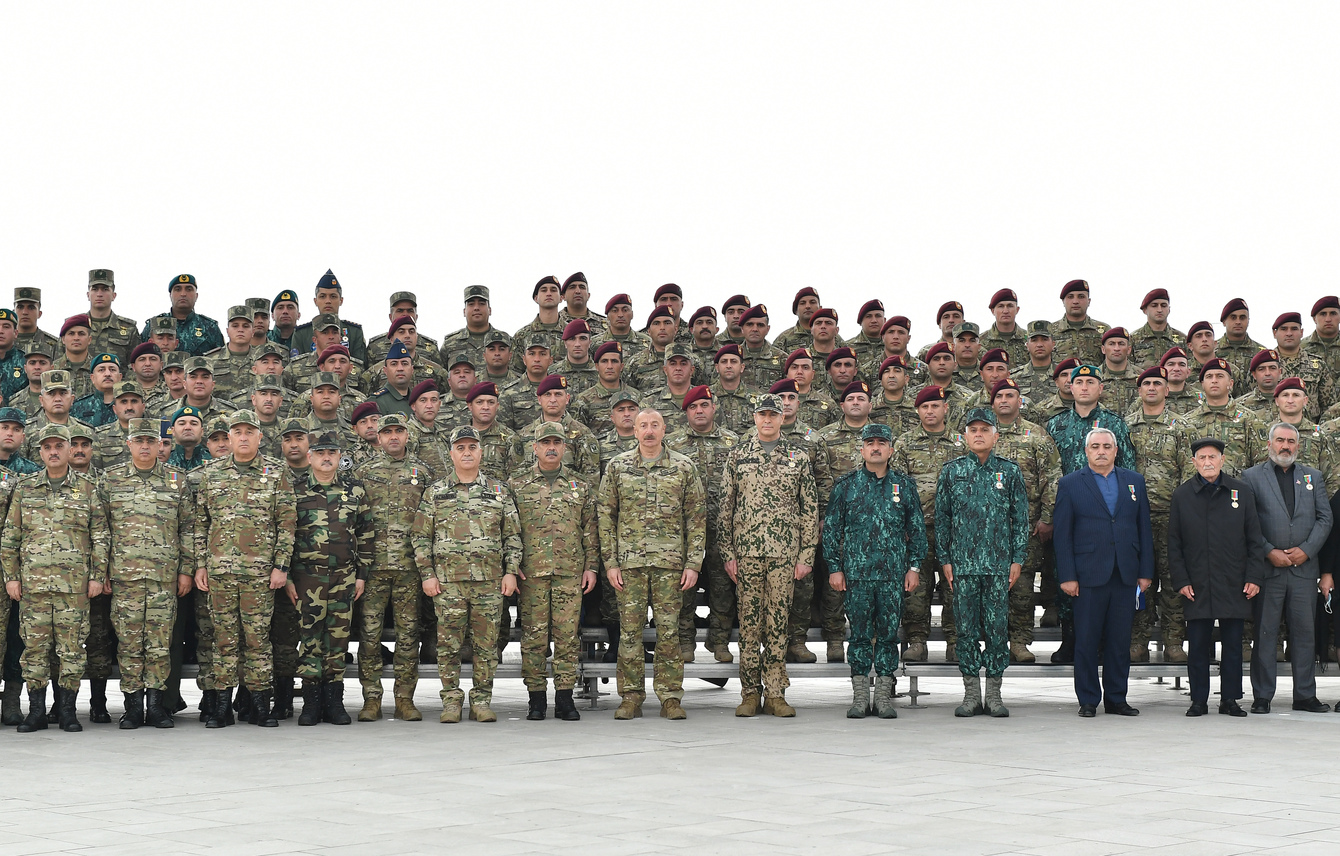
To better understand the significance of the April battles, it is important to look at the changes that took place in the Azerbaijani Army in the years preceding them. Shair Ramaldanov stated that “during that period, a large-scale modernization process was being carried out in the Azerbaijani Army under the leadership of President Ilham Aliyev.” He noted that “equipping the army with modern weapons had become a priority, and an arsenal of weapons and equipment based on the latest technologies had been formed.”
At the same time, according to Ramaldanov, “consistent steps were being taken towards transitioning to a professional army model, and personnel training, combat readiness, and tactical skills were being systematically developed.”
Arzu Naghiyev also stated that military reforms demonstrated their results during the April battles. According to him, “the military reforms implemented under the leadership of Supreme Commander-in-Chief Ilham Aliyev showed their results in these battles, and weaknesses in Armenia’s defense line were exposed.” Naghiyev described this as “a transition of the conflict from a passive phase to an active phase.”
This point is highly significant. Because under conditions of relative stability that lasted for a long time, many believed that the situation on the front line remained unchanged. The April battles shattered this perception.
Gabil Huseynli describes this modernization in more detail. He stated that “before the April battles, a large-scale army-building process was being carried out in Azerbaijan. Modern weapons and technologies were being acquired from various countries, while systematic reforms were also being implemented within the army.”
The professor noted that “during that period, multiple launch rocket systems, including LORA-type missiles and other modern technologies, began to be included in the arsenal of the Azerbaijani Army. At the same time, the domestic defense industry was being developed, and infantry fighting vehicles and other equipment were being supplied to the army.”
These facts show that the army had moved to a new stage not only in theoretical but also in technical terms.
Technology, tactics and real combat experience

One of the important aspects of the April battles was the testing of new technologies in real combat conditions. Shair Ramaldanov stated that “during the battles, the effectiveness of newly acquired weapons and equipment was practically tested, and it was determined which means proved themselves and which technologies were more effective.”
In his opinion, as a result, “the Azerbaijani Army formed more precise priorities in its armament policy and further improved its arsenal.”
This shows that the April battles were not only a result, but also a stage of learning.
Arzu Naghiyev continued this idea, stating that “the April battles increased morale both in society and in the army, and the application of new technologies and strengthening of personnel potential created a real basis for resolving the Karabakh conflict.”
According to him, at the same time, “the concept of a ‘frozen conflict’ formed over many years and the myths related to the Armenian army were shattered” precisely during these battles.
Gabil Huseynli evaluates this process from the perspective of international cooperation. He noted that “against the background of these processes, international cooperation was also in focus.”
This point shows that the preparation of the Azerbaijani Army was not limited only to the procurement of weapons, but that organizational and tactical coordination was also strengthened.
Moral and psychological uplift and public confidence

The April battles, along with a military victory, also created a significant moral and psychological turning point. Shair Ramaldanov stated that “after the Patriotic War, the significance of the April battles began to be understood more clearly. These events were not only a military success, but also led to a serious moral uplift within society, further strengthening confidence in the army and belief in victory.”
According to him, “the Azerbaijani Army has always been distinguished by high morale, but the April battles further reinforced this confidence with real results.”
Arzu Naghiyev, in turn, highlights the image of the Azerbaijani soldier’s heroism in this context. He noted that “during the battles, Azerbaijani servicemen demonstrated great examples of heroism, there were martyrs and wounded. The bravery shown by soldiers and officers has taken a special place in the public memory.”
A. Naghiyev added that “the April battles are commemorated every year, the memory of the martyrs is honored, and this event holds an important place in Azerbaijan’s history.”
This approach shows that the April battles have become an integral part of public memory.
Gabil Huseynli emphasized the moral significance of the positions liberated during the April battles. According to him, “the territories liberated during the battles were lands previously used by the Azerbaijani population, and their return also had great moral significance.”
This point shows that the issue was not only about changes in positions on the map, but also about strengthening national identity and the sense of moral justice.
Military cooperation with Türkiye and international dimension

Shair Ramaldanov highlights the role of military cooperation with Türkiye in the context of the April battles. According to him, “military cooperation with Türkiye has played an important role in the development of the Azerbaijani Army.”
Ramaldanov recalls that Türkiye “is one of NATO’s strongest armies, and within the framework of the ‘One nation, two states’ principle, this cooperation has also manifested itself in the military sphere.” He added that “Azerbaijani officers studied in Türkiye’s military schools and, after returning to the country, actively participated in the development of the army. At the same time, Turkish specialists also made significant contributions to the formation of the Azerbaijani Army.”
In his opinion, today the Azerbaijani Army has the potential to operate jointly with the Turkish army on an equal level.
Gabil Huseynli, in turn, notes the concern experienced by Armenia in the context of the battles. According to him, “these processes caused serious concern on the Armenian side. Official Yerevan made various appeals to achieve international intervention, sought to stop the fighting, and the issue was discussed at a high political level.”
This approach proves that the April battles had not only local, but also regional and political weight.
The beginning of the path leading to the Patriotic War

The most important historical outcome of the April battles was that this event was remembered as the beginning of a future great victory.
Shair Ramaldanov noted that “the four-day April war can be assessed as an announcement of the future great Victory.” He stated that “the April battles of 2016 demonstrated the combat capability, professionalism, and technological superiority of the Azerbaijani Army. As a logical continuation of this process, during the Patriotic War in 2020, the Azerbaijani Army defeated the occupying forces in just 44 days and restored the country’s territorial integrity.” Ramaldanov added that “as a result of the anti-terror measures carried out at a later stage, Azerbaijan’s sovereignty was fully ensured.”
According to Arzu Naghiyev, “the April battles can be regarded as a kind of preparatory stage for the 2020 Patriotic War.” He emphasized that “the experience gained during these battles, the application of new tactics and technologies, as well as the strengthening of public confidence in victory, had a serious impact on subsequent military operations.” Another important point made by Naghiyev is that “these battles were an important message for both friends and enemies and demonstrated the determination of the Azerbaijani people to achieve victory.”
Gabil Huseynli also supported this view, stating that “the April battles became an important stage that demonstrated the strength, level of preparedness, and modern combat capability of the Azerbaijani Army, and created a solid foundation for subsequent processes.”
The logical conclusion drawn from the overall views of the experts is that the April battles were not an end, but rather a beginning. The April war is an event with multi-layered significance in Azerbaijan’s modern history. On the one hand, these battles revealed the real strength of the army; on the other hand, they demonstrated the political determination of President Ilham Aliyev, while also strengthening public confidence in victory. The April battles proved that Azerbaijan would not accept the long-standing “status quo.”
And so it happened. The Republic of Azerbaijan transitioned to a new stage, both militarily, politically, and morally, achieved a great Victory, and fully restored its territorial integrity and sovereignty. The April battles were the rehearsal for this great Victory.

