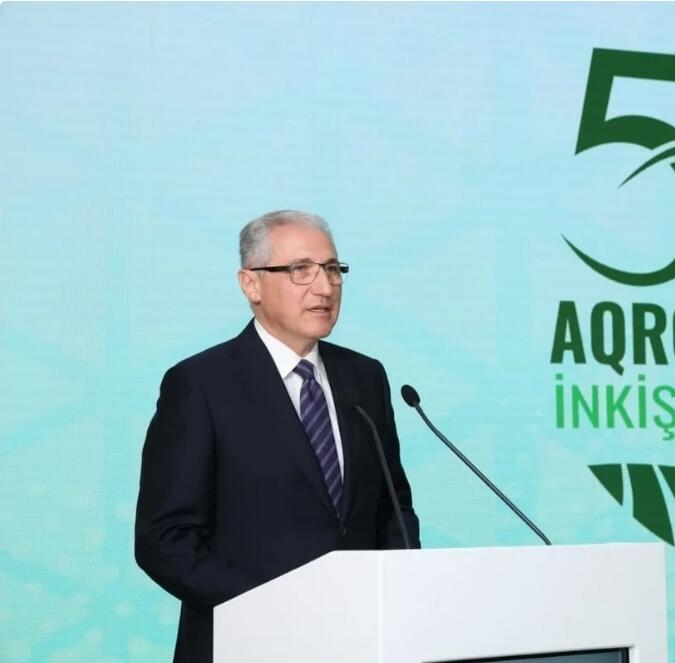
Babayev stressed that agriculture is not only an economic activity but also a sector of strategic importance for food security and economic stability: "In recent years, the nature of climate and weather events has changed significantly. Once local and seasonal, they now occur with greater scale and intensity. Stronger hurricanes, prolonged droughts, large‑scale floods, and other extreme weather events are happening more frequently and across wider regions."
He noted that climate change complicates planning in agriculture: "According to the World Meteorological Organization (WMO), the number of weather‑ and climate‑related disasters has increased nearly fivefold in the past 50 years. Floods are now among the most widespread and impactful disasters. In the last 30 years, more than 4,700 flood events have been recorded in 168 countries, affecting over 3.2 billion people and causing $1.3 trillion in economic losses. The Food and Agriculture Organization (FAO) estimates that natural disasters have caused over $3 trillion in agricultural damage in the same period, averaging more than $100 billion in losses annually."
He emphasized that these figures show climate risks are no longer just an environmental issue but a serious challenge to food security and economic stability. The growing intensity and frequency of extreme weather events create new difficulties for early warning systems, complicate agricultural planning, and increase risks for farmers.

